
Boost Productivity with AI SOPs & Training
Productivity, Small Business, AI SOPs, Training
Boosting Small Business Productivity with AI SOPs and Smart Training Modules
Clear processes and consistent training used to demand hours of manual work. Today, small businesses can use AI to turn scattered know‑how into streamlined SOPs and interactive training modules that quietly increase productivity every single day.
Why AI SOPs Matter for Small Business Productivity
In a small business, productivity often depends on a few key people who “know how everything works.” When those processes live only in their heads, mistakes multiply, new hires struggle, and owners get dragged into every decision. AI-powered standard operating procedures (SOPs) change that dynamic by turning tribal knowledge into clear, repeatable workflows in a fraction of the time traditional documentation would take.
Instead of starting from a blank page, you can feed AI your existing emails, checklists, templates, and screenshots. The AI then drafts step‑by‑step SOPs that you refine, approve, and roll out to your team. The result is fewer errors, faster onboarding, and a business that runs on systems rather than memory and good intentions.
Best Practices for Creating Effective AI SOPs
To truly increase productivity in a small business, AI SOPs must be practical, clear, and easy to follow. Use these tips and best practices when building them:
Start with your highest-impact tasks. Focus first on processes that are frequent, time-consuming, or error-prone, such as client onboarding, invoicing, or customer support replies. AI can quickly turn recurring tasks into reliable SOPs that save hours every week.
Feed AI real examples, not vague descriptions. Upload sample emails, chat transcripts, and documents so the AI can mirror your tone, tools, and actual steps. The more concrete your inputs, the more accurate and usable your AI-generated SOPs will be.
Keep each SOP short and focused. Break complex workflows into smaller SOPs (for example, “Qualify a lead” and “Send proposal” as separate documents). This makes them easier to update, search, and follow under pressure.
Use checklists and decision points. Ask the AI to format steps as numbered lists with checkboxes and include simple decision rules, such as “If budget is under X, follow Path A; otherwise follow Path B.” This reduces hesitation and speeds up day‑to‑day execution.
Review with the people who do the work. AI can draft quickly, but your team will spot missing details and edge cases. Build a habit of having frontline staff review and suggest improvements before SOPs are finalized.
💡 Pro Tip: Add screenshots, links, and short videos to AI SOPs so team members can see exactly where to click and what “good” looks like in your systems.
Turning SOPs into AI-Powered Training Modules
Documentation alone does not guarantee consistent performance. To lock in productivity gains, translate your AI SOPs into interactive training modules that help new and existing employees practice the right way of doing things. AI tools can automatically convert written SOPs into structured lessons, quizzes, and scenario-based exercises tailored to different roles.
For example, you can take a customer support SOP and ask AI to create a short onboarding course: an overview lesson, three example conversations, and a quick quiz. New hires complete the module on their own time, while managers review quiz results and provide targeted coaching instead of repeating the same explanations over and over.
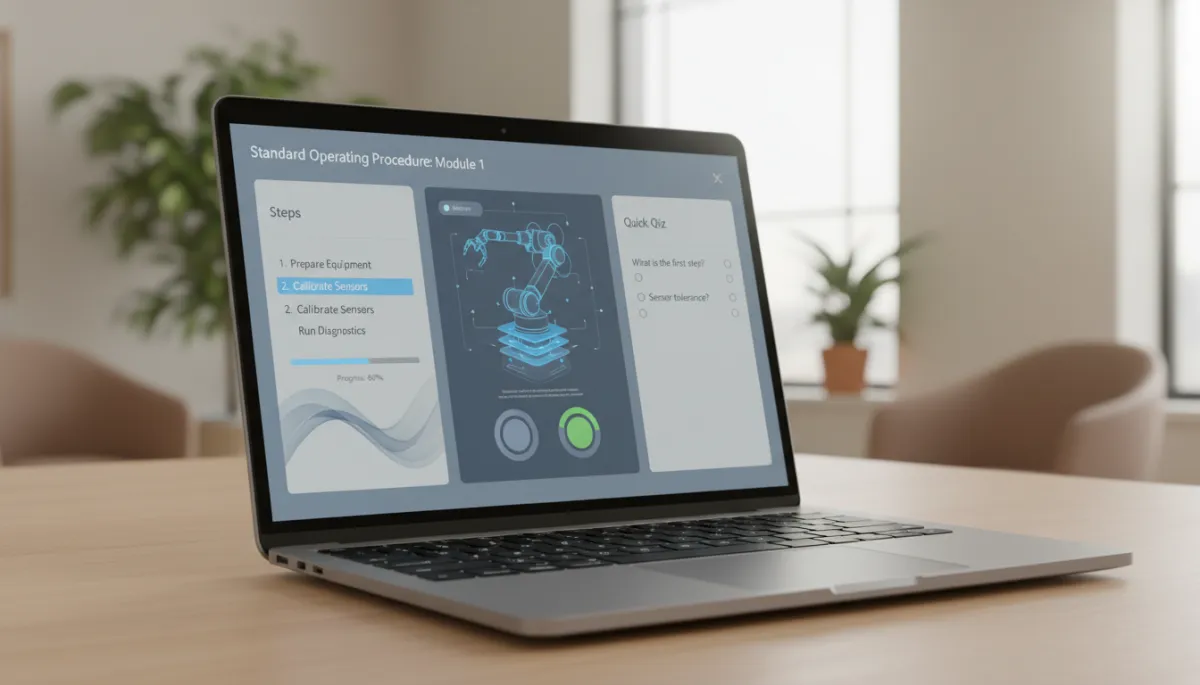
Turning SOPs into guided training modules keeps new hires productive from week one.
Training Best Practices to Sustain Higher Productivity
To make your AI-powered training modules truly effective, treat them as living tools rather than one‑off projects. A few simple habits will help you maintain productivity gains over time:
Keep modules short and role-specific. Aim for 10–15 minute lessons focused on a single task or outcome. This fits into a busy small business schedule and makes it easier for team members to revisit content when needed.
Blend AI training with real work. Pair each module with a live task, such as “Complete this lesson, then process three real orders while following the SOP.” This speeds up learning and ties training directly to measurable productivity.
Use AI to personalize follow-up. Many platforms can analyze quiz results and suggest extra practice where someone is struggling. This targeted support helps each person reach competency faster, without overloading managers.
Update SOPs and modules together. Whenever a process changes, update the AI SOP first, then regenerate or adjust the training module. Keeping both in sync prevents confusion and ensures your productivity systems reflect reality.
📌 Key Takeaway: The real power of AI SOPs and training modules lies in consistency—every team member follows the same proven steps, freeing your business from bottlenecks and constant re‑teaching.
Bringing It All Together
Increasing productivity in a small business is not about working harder; it is about working in a more consistent, predictable way. AI SOPs capture how your best people already operate, while AI-powered training modules ensure everyone else can quickly reach that same standard. Start with one critical process, let AI help you document and train it, and then expand from there. Over time, you will build a library of living systems that support your team, protect your time, and allow your business to grow without chaos.
