CALL NOW: (855) 633-6535

CALL NOW: (855) 633-6535
CRM for Small Business: Organize Leads, Increase Bookings, and Power Your AI Automations with Small Guy AI
Small Guy AI is an AI agency for small business owners that helps implement CRM systems and AI tools for small business communication—so leads don’t fall through the cracks and bookings become more predictable.

A CRM (Customer Relationship Management system) is one of those tools small businesses often “mean to set up later.”
But later usually becomes never—until leads start slipping through the cracks, follow-ups get missed, and your growth feels inconsistent. The truth is simple: if your business relies on inquiries, appointments, estimates, or repeat customers, a CRM isn’t a luxury. It’s the system that keeps your pipeline organized and your customer communication consistent.
And today, a CRM is more than a digital address book. When combined with ai for small business workflows, it becomes the control center for your customer journey—tracking leads, triggering follow-ups, reducing no-shows, and increasing lifetime value without requiring more admin time.
At Small Guy AI, we help small businesses use CRM + automation as part of a connected ecosystem of ai agents for small business. That means your CRM doesn’t just “store contacts.” It connects to appointment setting, text and email reminders, social messaging, and even an AI receptionist for small business so every lead gets handled quickly and every customer gets the right message at the right time.
Why a CRM Matters for AI Small Business Growth
This is where ai and small business become a powerful combination.
Small businesses often run on memory, sticky notes, inbox searches, and “I’ll follow up tomorrow.” That works when you’re small—until it doesn’t. As soon as you have multiple lead sources (calls, web forms, social DMs, referrals), things get messy fast.
A CRM helps you:
track who contacted you and when
record what they asked for
schedule follow-ups so nothing is missed
see where each lead is in your pipeline
understand which marketing efforts are working
keep customer history in one place
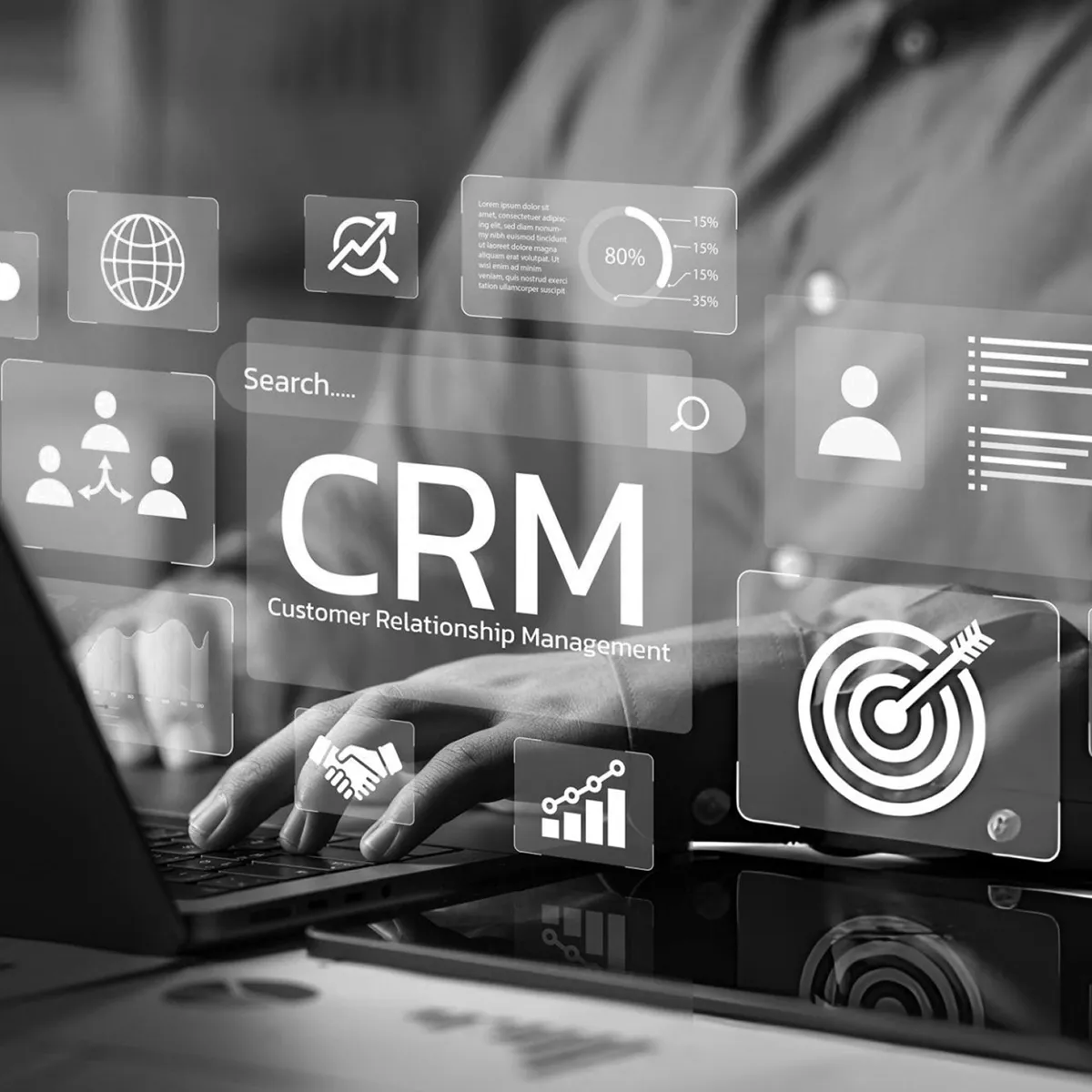
AI works best when it has structure. A CRM provides that structure by organizing contacts, conversations, and stages—so your automations and ai agents small business owners rely on can behave intelligently.
The Advantages of a CRM for Small Business
1) Fewer lost leads (because follow-up becomes a system)
Most leads aren’t lost because they said “no.” They’re lost because nobody followed up. A CRM ensures every lead has:
a status (new, contacted, booked, quoted, won, lost)
a next step (call, text, email, appointment)
a reminder so it actually happens
This alone can improve conversion dramatically, which is why a CRM is often one of the best AI tools for small business foundations—even before adding AI.
2) Better customer experience (because you remember everything)
Customers expect you to remember:
what they asked
what they booked
what they were quoted
what happened last time
A CRM helps you deliver a smoother, more professional experience, especially as you grow.
3) A clearer sales pipeline (so growth becomes predictable)
A CRM turns “busy” into “measurable.” You can see:
how many leads came in this week
how many booked
how many are waiting on follow-up
where deals get stuck
That visibility is what makes improvement possible.
4) Stronger retention and repeat business
A CRM helps you track:
last service date
upcoming renewal timing
customer segments (VIPs, inactive customers, new customers)
This supports retention campaigns—one of the most profitable uses of ai tools for small business automation.
AI assistant for small business owners works best when your customer data is organized—CRM creates the structure that powers automated follow-up, reminders, and retention.
How a CRM Works (Simple, Practical Breakdown)
Contacts + Communication History
A CRM stores customer and lead information in one place:
name, phone, email
notes and preferences
message history and call logs (when connected)
tags and categories Font
name, phone, email
notes and preferences
message history and call logs (when connected)
tags and categories Font
Tasks, Reminders, and Follow-Up
CRMs make follow-up automatic by prompting:
call reminders
email follow-ups
text follow-ups
appointment confirmations
This reduces human error and keeps revenue moving.
Pipeline Stages
Most CRMs use stages to show where a lead is:
New lead
Contacted
Scheduled
Quote sent
Won / booked
Follow-up needed
Lost / closed
This pipeline view helps your team prioritize daily actions.
Automations and Integrations
Modern CRMs integrate with:
scheduling tools
email and SMS platforms
forms and landing pages
phone systems
marketing tools
This is where AI becomes a multiplier. Once your CRM is connected, your ai agent for small business workflows can trigger the right message at the right time without manual effort.
CRM + AI Agents for Small Business:
Why This Combination Is So Powerful
A CRM is the “brain” that stores and organizes customer information. AI agents for small business are the “hands” that act on that information across channels.
With Small Guy AI, your CRM can work alongside:
* AI receptionist for small business (calls → lead creation → follow-up triggers)
* AI appointment setter (booking workflows + reminders)
* AI chatbot (website lead capture → CRM pipeline)
* AI social assistant (DMs/comments → lead capture → follow-up sequences)
* client communication automation (texts/emails/newsletters/renewals)
This is how you get a complete system: ai agent small business workflows that respond quickly, capture leads accurately, and keep customers engaged over time.
Best AI tools for small business owners are connected: CRM + AI receptionist + automated follow-up creates predictable lead handling and higher conversion.
How Small Guy AI Helps You Use a CRM (AI Agency for Small Business Approach)
Many businesses buy a CRM and never fully implement it.
The software isn’t the problem—setup is. A CRM only works if it matches your workflow and your team actually uses it.
Small Guy AI acts as an ai agency for small business, meaning we help you build a CRM system that supports real outcomes:
we map your lead sources and pipeline stages
we define what data matters (and what doesn’t)
we create automations for lead follow-up, reminders, and retention
we connect CRM to your communication channels (SMS, email, scheduling)
we align the system with your brand voice and customer journey
we provide access to ai consultants for small business* to guide strategy
If you’ve ever searched for an ai consultant for small business, what you’re really looking for is someone who can turn “tools” into “systems.” That’s what we do.
CRM for Small Business + Automation (Small Guy AI) - FAQ
What is a CRM for small business, and why does it matter if I’m already “keeping track” in my inbox or spreadsheet?
A CRM (Customer Relationship Management system) is the central place where your small business stores and organizes everything that matters about leads and customers—contact information, conversation history, appointment or quote details, pipeline status, follow-up tasks, notes, and outcomes. If your current “system” is an email inbox, a notepad, a spreadsheet, or memory, you may feel like you’re tracking things—until you get busy. The moment your phone rings nonstop, your team is short-staffed, or you’re working in the field, those informal systems break down.
The core value of a CRM is that it turns scattered communication into a structured process. Instead of hunting through messages or trying to remember who to call back, a CRM shows you exactly who needs attention, what they asked for, and what the next step should be. That’s why a CRM is one of the most foundational ai tools for small business workflows. AI works best when it has clean structure and clear triggers. A CRM provides that structure by organizing contacts into stages like “New Lead,” “Contacted,” “Booked,” “Quote Sent,” “Won,” “Lost,” and “Follow-Up Needed.”
When you combine a CRM with automations and ai agents for small business, the CRM becomes more than a database—it becomes the “brain” that powers your customer journey. It helps you respond faster, follow up more consistently, and create repeat business without relying on perfect human memory. For many owners, this is the first step toward predictable growth: a system that makes lead handling and customer communication reliable.
What problems does a CRM solve for a small business (and what revenue leaks does it quietly prevent)?
A CRM solves the problems that often don’t look like “problems” until they cost you money. In small businesses, the biggest revenue leaks are usually invisible:
* leads that contacted you but never got followed up properly
* quotes that went out and were never checked on again
* customers who would have returned, but no one reminded them
* missed calls that turned into missed opportunities
* appointments that no-showed because reminders weren’t consistent
* repeat questions and admin tasks that eat up time and reduce capacity
A CRM prevents these leaks by creating structure. It ensures every inquiry is recorded, every lead has a status, and every customer can be followed up with at the right time. It reduces the “randomness” that many small businesses experience—some weeks are great, some are slow, and it’s hard to tell why. With a CRM, you can see where leads are getting stuck and fix the bottleneck.
This is where ai for small business becomes truly practical. AI can help you answer faster, send reminders, follow up automatically, and re-engage old customers—but only if the customer data is organized. A CRM is the system that makes those automations possible and measurable. That’s why many business owners eventually realize: if they want the best AI tools for small business, they need a strong CRM foundation first.
How does a CRM actually work (contacts, pipelines, tasks, and automation triggers) in plain English?
A CRM works like a digital control center for your customer relationships. Most CRMs have four simple components:
Contacts:
This is your database of leads and customers—names, phone numbers, emails, addresses, notes, tags, and sometimes conversation history.
Pipeline or stages:
This is the visual “path” a lead takes from first contact to becoming a customer. Typical stages include “New Lead,” “Contacted,” “Scheduled,” “Quote Sent,” “Won,” and “Lost.” Seeing leads in a pipeline helps you quickly understand what needs attention.
Tasks and reminders:
A CRM helps you remember what to do next by assigning tasks like “Call back,” “Send quote,” “Follow up in 2 days,” or “Confirm appointment.” Instead of relying on memory, the system tells you what’s next.
Automations and triggers:
This is the layer where AI and communication automation come in. A trigger might be “New lead created” or “Appointment booked,” and then the CRM can automatically send a confirmation text, schedule reminders, notify staff, or start a follow-up sequence.
Small Guy AI helps small businesses build CRM systems that don’t just store information—they drive actions. When connected to ai agents small business owners rely on (like an AI receptionist, chatbot, or appointment setter), the CRM becomes the backbone that makes the customer journey consistent.
Why is a CRM one of the best AI tools for small business success (even though it’s not “AI” by itself)?
Many owners think “AI” means chatbots, voice assistants, or content generation. But the best AI systems require clean, organized data and reliable workflows. A CRM provides exactly that. It’s the structure AI needs to behave intelligently.
For example:
Your *AI receptionist for small business** answers a call and captures lead details. Where do those details go? Into the CRM.
* Your chatbot captures a website visitor’s email and service request. Where does that lead get tracked? In the CRM.
* Your automation sends appointment reminders. How does it know who has an appointment and when? The CRM (or connected scheduling system) holds that data.
* Your reactivation campaign targets customers who haven’t booked in 6 months. How do you find them? The CRM.
So while a CRM might not feel like an “AI product,” it’s often the most important part of an ai small business strategy. It turns your customer data into something usable—and that’s what allows ai agents for small business to support conversion, no-show reduction, and retention.
Small Guy AI approaches CRM as the foundation of your system. AI is powerful, but without a CRM, it’s like having a high-performance engine with no steering wheel.
How does a CRM help me convert more leads (and why follow-up is the real secret)?
Most small businesses don’t lose leads because people said “no.” They lose leads because the follow-up didn’t happen or didn’t happen fast enough. People get busy. They compare options. They forget. They need a second touch. A CRM helps you convert more leads by making follow-up consistent and unavoidable.
A CRM improves conversion in several practical ways:
* Every lead is captured and tracked (no more “did we reply?”)
* Every lead has a stage and next step
* Follow-up reminders ensure leads don’t go cold
* Automated sequences can send polite check-ins without staff effort
* You can prioritize high-intent leads and respond faster
When combined with Small Guy AI, your CRM can automatically trigger follow-up messages after a missed call, a form submission, or a quote request. That’s where AI becomes an AI assistant for small business owners—it helps you keep momentum without needing you to manually chase every opportunity.
This is also why small businesses searching for ai agent for small business solutions often end up investing in CRM + automation. AI improves speed and consistency. CRM ensures nothing gets lost.
How does a CRM improve customer experience (and why customers feel the difference immediately)?
Customers don’t want to repeat themselves. They don’t want to explain their issue every time they call. They don’t want confusion about what they booked or what they were quoted. A CRM helps your business deliver a more seamless experience by keeping history in one place.
With a CRM, your team can quickly see:
* what the customer asked last time
* what service they received
* what notes or preferences were recorded
* what the current status is (booked, waiting, follow-up needed)
* what communication has already been sent
That improves customer satisfaction because interactions feel informed and professional. Even a small business can feel like a well-organized organization when communication is consistent.
When Small Guy AI connects your CRM to reminders, confirmations, and follow-ups, customers also experience better communication. They get clear next steps, fewer delays, and fewer missed messages. That is one of the most valuable real-world outcomes of ai and small business—it’s not about sounding futuristic; it’s about being easier to work with.
What’s the difference between a CRM and an appointment system (and do I need both)?
An appointment system is primarily designed to manage scheduling—available times, booked slots, confirmations, and reminders. A CRM is designed to manage relationships—lead tracking, pipeline stages, customer history, follow-up tasks, segmentation, and long-term retention.
Some platforms blur the lines by offering both features in one system, but conceptually:
* Scheduling manages your calendar
* CRM manages your pipeline and customer journey
Many small businesses benefit from having both, either integrated or in a combined platform. Small Guy AI often helps connect these pieces so that:
* a booked appointment updates the CRM stage
* a missed appointment triggers follow-up
* appointment reminders are automatic
* post-appointment retention sequences are triggered
This is how ai agents small business owners use become most effective—when scheduling data and customer data work together. The result is fewer no-shows, better follow-up, and higher repeat business.
How does Small Guy AI connect CRM to AI agents for small business (voice, chat, social, and automation)?
Small Guy AI’s advantage is building connected systems. A CRM alone is helpful, but it becomes dramatically more powerful when connected to the channels where customers interact with you. That’s where ai agents for small business come in.
Common connections include:
* AI receptionist for small business → calls become CRM leads automatically
* AI chatbot → website conversations become CRM leads with notes and intent
* AI appointment setter → booking workflows update CRM stages and trigger reminders
* Social media assistant → DMs/comments become tracked leads and follow-ups
* Communication automation → confirmations, reminders, newsletters, renewals, reactivation
Instead of having separate “islands” of data, the CRM becomes the central system that records and triggers everything. That means no matter how a lead comes in—phone, website, Instagram, or Google—your team has the same visibility, and your automation can operate consistently.
This is a major reason businesses work with an ai agency for small business rather than trying to stitch everything together themselves. The value isn’t just the CRM—it’s the connected system.
Can a CRM reduce no-shows and improve retention (or is that only a “reminder tool” problem)?
A CRM plays a huge role in reducing no-shows and improving retention because it helps you manage the customer lifecycle—not just one appointment.
For no-shows, a CRM supports:
* consistent confirmations and reminders (triggered from booking data)
* rescheduling workflows that make it easy to change plans
* clear policy communication and next steps
* tracking who no-shows often (so you can adjust policies if needed)
For retention, CRM helps by:
* tracking service history and timing
* segmenting customers based on last visit
* triggering renewal reminders and rebooking prompts
* sending targeted follow-ups that feel relevant
* keeping monthly newsletters consistent
When paired with Small Guy AI communication automation, the CRM becomes the trigger and record-keeper for these sequences. That’s where a CRM transforms into one of the best AI tools for small business foundations: it supports not just getting customers, but keeping them.
How do AI consultants for small business help set up a CRM so it actually gets used?
Many businesses buy a CRM and then abandon it. Not because CRMs don’t work, but because the setup doesn’t match how the business actually operates.
A CRM only works when:
* pipeline stages reflect your real workflow
* your team knows what to do with each stage
* automations reduce work instead of adding complexity
* data entry is minimal and mostly automated
* the system produces visible benefits quickly
This is where ai consultants for small business matter. An ai consultant for small business helps you decide:
* what your pipeline stages should be
* what information must be captured (and what can be ignored)
* which automations deliver the fastest ROI
* how to integrate leads from calls, web, and social
* how to prevent the CRM from becoming “busywork software”
Small Guy AI prioritizes practical wins first: lead capture, follow-up automation, reminders, and retention triggers. Once the system proves value, adoption becomes easier.
Is CRM implementation complicated (and what does Small Guy AI actually do for setup)?
CRM implementation can be complicated if you try to customize everything alone. But it doesn’t have to be. Small Guy AI helps by simplifying and building what matters most first.
Typically, we help with:
* creating a pipeline that matches your business process
* setting up lead sources and capture points
* connecting phone calls, web forms, chat, and social to CRM
* writing and configuring follow-up sequences
* setting up reminders and retention messaging
* creating tags/segments that support marketing and reporting
* ensuring brand voice in automated messages
* testing flows for real-world scenarios
Because Small Guy AI operates like an ai agency for small business, the goal is not “perfect on day one.” The goal is functional, revenue-supporting workflows that start delivering results, then get refined over time.
How do I know if my small business is “ready” for a CRM (or if it’s too early)?
If you have leads coming in and you’ve ever thought:
* “I forgot to follow up with them…”
* “Did anyone reply to that message?”
* “We’re busy but revenue still feels inconsistent…”
* “We miss calls when we’re slammed…”
* “We should do more rebooking and reminders…”
…then you’re ready.
CRM isn’t about being “big enough.” It’s about having enough activity that manual tracking becomes unreliable. Even solo operators benefit, because a CRM + automation gives you the consistency of a bigger team.
In fact, many ai small business owners adopt CRM earlier specifically because AI and automation are easier when you’re organized. The sooner you build structure, the easier it is to scale without chaos.
What kind of results should I expect from CRM + automation (and what outcomes matter most)?
Results vary by industry, lead volume, and your current workflow—but the most common outcomes include:
Higher lead conversion:
More leads turn into booked appointments or closed deals because follow-up becomes consistent and fast.
More predictable pipeline:
You can see exactly how many leads you have, where they are, and what needs attention.
Reduced no-shows:
Automated confirmations and reminders improve show rates.
Improved customer experience:
Your business feels organized, informed, and professional in every interaction.
Higher retention:
Renewal reminders and rebooking prompts increase repeat business.
Many small businesses find that CRM + automation pays off quickly because it reduces the “leaks” they didn’t realize were happening. This is the real-world value of ai for small business owners: fewer missed opportunities and less manual admin.
Will a CRM feel “too corporate” for my business (and how do you keep it simple)?
A CRM only feels corporate when it’s overbuilt. Small businesses don’t need endless fields, complicated reports, and heavy data entry. They need:
* clear stages
* basic contact info
* simple notes
* a next step
* automation that reduces work
Small Guy AI designs CRM systems around simplicity. We focus on what drives outcomes: lead capture, follow-up, booking, reminders, and retention. Everything else is optional.
Think of it like this: your CRM should feel like a “control panel,” not an extra job. When your team can glance at the pipeline and know what to do, adoption becomes natural.
That’s also why our approach fits the keyword reality: businesses searching ai tools for small business aren’t looking for complexity—they’re looking for leverage.
What’s the best next step if I want CRM + AI automation with Small Guy AI?
The best next step is a discovery conversation where we map your customer journey and identify where leads are being lost or where communication breaks down. We typically look at:
* how leads come in (calls, web, social, referrals)
* how quickly your team responds
* what your booking or sales process looks like
* where follow-up becomes inconsistent
* no-show patterns (if appointment-based)
* retention opportunities (renewals, rebooking, reactivation)
From there, we build a CRM setup that fits your workflow and connect it to the automations that matter most. This is where Small Guy AI functions as an ai agency for small business with ai consultants for small business support: we help you implement systems that produce measurable results, not just install software.
If your goal is to capture more leads, book more appointments, reduce no-shows, and create repeat business with less admin work, CRM + automation is one of the most valuable foundational investments you can make—and Small Guy AI is built to make it practical, connected, and effective.
Ready to start yOur AI and Automation Business Growth?
CLICK THE BUTTON BELOW!

© 2026 Small Guy AI. All rights reserved.
Last Updated 10/12/2026